
Mobility · August 7, 2026 · 5 min read
Wheels and Paws: How Mobility Service Dogs Restore Independence
For wheelchair users, a mobility service dog is a set of hands that never tires. Here's what these dogs are trained to do and what it takes to build one team.
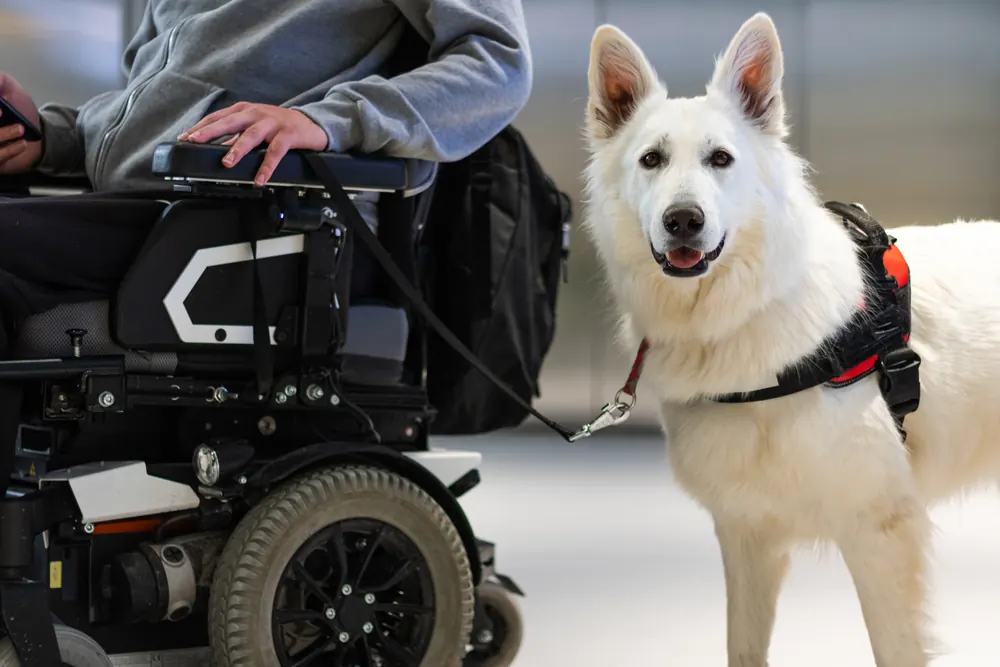
A dropped set of keys is a minor annoyance for most people. For someone using a wheelchair, it can mean the difference between leaving the house and staying home. Mobility service dogs exist in that gap. They are trained to do the dozens of small physical tasks that add up to a day of independence.
What a mobility dog actually does
- Retrieval: keys, phones, wallets, medication, laundry — anything dropped or out of reach.
- Door work: pulling automatic door buttons, tugging doors open, closing them behind the team.
- Bracing and counterbalance: providing steady support during transfers, for handlers whose medical team has cleared it.
- Light pull assistance: helping a manual chair over a threshold or up a short incline.
- Get help: finding a caregiver, activating an alert button, or bringing a phone in an emergency.
- Navigation support: moving ahead through crowds to create space in tight public areas.
The part nobody sees
Every one of those tasks is built from hundreds of small repetitions, then generalized to new places until the dog performs reliably in a busy pharmacy, not just a quiet training room. Add public access training, health clearances, and structured handler instruction, and a single mobility placement represents months of professional work.
Physical structure matters too. A mobility dog needs the size, joint health, and soundness to do this work for years without injury. Screening for that is part of why not every candidate moves forward.
What changes for the handler
Handlers describe the shift less as a list of tasks and more as a change in the size of their world. Errands stop requiring a second person. Appointments stop requiring a ride and a helper. The mental load of planning around every possible dropped object or heavy door quietly disappears.
There is a social effect as well. A working dog often changes the tone of a room — people make eye contact with the handler instead of looking away. That matters more than most people realize.
Cost is the barrier, not need
Professional training, veterinary care, equipment, and post-placement follow-up are expensive, which is why most people who would benefit from a mobility dog never get one. Our model removes that barrier: we fund the training and place the dog at no cost to the recipient.
Some of our dogs come from Ohio shelters. In other cases, we evaluate and train a person's own dog, and if that dog passes our standards, the Foundation pays for that training. Either way, the recipient never pays.
How to help
Donations go directly toward training hours, veterinary care, and equipment for the next team. A monthly gift is the most useful kind, because training runs on a schedule and predictable funding means we can commit to a dog before the money is fully raised. If you would like to put another set of paws to work, your support is what makes it possible.
Frequently asked questions
- What tasks does a mobility service dog perform?
- Mobility service dogs retrieve dropped or out-of-reach items, open and close doors, press automatic door buttons, provide bracing or counterbalance when medically cleared, help pull a manual chair over thresholds, and get help in an emergency.
- How much does a mobility service dog cost?
- Professionally trained mobility service dogs commonly cost tens of thousands of dollars once training, veterinary care, equipment, and follow-up support are included. The American Service Dog Foundation funds that training through donations and places dogs at no cost to the recipient.
- Can my own dog become a mobility service dog?
- Sometimes. We evaluate temperament, health, and physical structure first. If a person's own dog passes our standards, the Foundation funds the training. Not every dog is suited to mobility work, since the job requires size, joint health, and years of soundness.
- How do I apply for a mobility service dog in Ohio?
- Apply through The American Service Dog Foundation's application page. Every placement is different — timelines depend on the applicant's needs, whether a suitable dog is available, and whether their own dog qualifies. Not every applicant is approved.
Two lives changed by one dog
Your gift places a trained dog with someone who needs it — at no cost to them.
The American Service Dog Foundation identifies and trains dogs with the right temperament, then places them with people with disabilities free of charge.